
How to Scale a D2C Footwear Brand from 200 to 2,000 Units a Month

How to Scale a D2C Footwear Brand
Learn how a D2C footwear brand can scale from 200 to 2,000 units a month through better production, inventory, and growth planning.
A D2C footwear brand can scale from 200 to 2,000 units a month by first proving demand, then improving product quality, planning inventory, increasing manufacturing capacity in stages, and building systems for repeat production. The growth does not come from selling more pairs alone. It comes from creating a footwear operation that can produce, dispatch, restock, and maintain quality every month without chaos.
Here is a realistic case-study-style journey of how one hypothetical Indian D2C shoe brand made that shift.
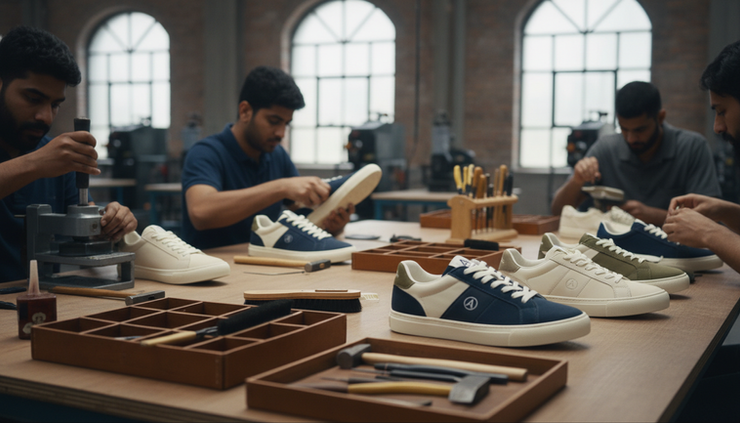
How can a D2C footwear brand scale from 200 to 2,000 units?
Let’s call the brand UrbanTread, a hypothetical D2C footwear label selling casual sneakers and everyday slip-ons in India.
UrbanTread started with 200 pairs a month. The founders had three designs, basic packaging, and a small online store. Sales came through organic demand, repeat buyers, and limited paid campaigns. The problem was not only demand. The problem was control.
At 200 pairs, a founder can check every sample, message every buyer, and manually follow up with the manufacturer. At 2,000 pairs, that same method breaks.
UrbanTread scaled by building these parts one by one:
A smaller, sharper product range
Better material and fit standards
A repeatable production calendar
Clear inventory planning
Reliable manufacturing coordination
Quality checks at batch level
Cash-flow discipline
Packaging that could handle higher dispatch volume
This is the real meaning of D2C footwear brand scaling. It is the move from founder-led firefighting to a system-led footwear business.
What should a footwear brand do before increasing production?
Before UrbanTread increased production, it stopped treating all products equally.
The brand had three styles:
A chunky sneaker with high interest but slow repeat sales
A slip-on with steady conversion and fewer size exchanges
A casual lace-up that sold well in black and tan
Instead of pushing all three, the team reviewed order patterns. They looked at:
Which style sold without heavy discounting
Which sizes moved fastest
Which colours had repeat demand
Which products had fewer complaints
Which pairs customers reordered or recommended
The clear winner was the casual lace-up. Black sold fastest, tan followed, and white moved slowly.
So the brand made a practical decision. It did not scale everything. It scaled the proven product first.
That is a key part of how to scale a footwear brand. A larger order should be based on evidence, not excitement.
What did UrbanTread fix before larger production?
The first 200 pairs revealed small problems that would become expensive at 2,000 pairs.
The team improved:
Sole bonding
Insole comfort
Upper material consistency
Size grading
Stitch finishing
Packaging strength
Product photography accuracy
SKU naming and size labels
At low volume, a few defective pairs look manageable. At higher volume, the same defect rate can damage reviews, increase returns, and block cash in replacements.
This is why footwear manufacturing for D2C brands must focus on repeatability. A good first sample is useful, but a repeatable production batch is what supports growth.
How does manufacturing capacity affect D2C growth?
Manufacturing capacity affects how fast a D2C footwear brand can accept orders, restock bestsellers, and launch new drops. If production is slow, growth turns into stockouts. If production is rushed, quality drops.
UrbanTread faced this when demand crossed 400 pairs a month. The manufacturer could produce more, but only with better planning.
The brand moved from informal ordering to a monthly production plan.
It included:
Confirmed styles and colours
Size-wise quantity
Material availability
Production start date
Quality check points
Packing timeline
Dispatch readiness date
This reduced confusion. It also helped the manufacturer plan labour, materials, cutting, stitching, lasting, finishing, and packing.
A partner like MakeMyShoe can support this stage as an Indian footwear OEM/ODM and private-label manufacturing partner. For emerging labels, the value is not only in making shoes. It is in helping convert a product idea into a repeatable manufacturing process, from small initial production to larger-scale manufacturing.
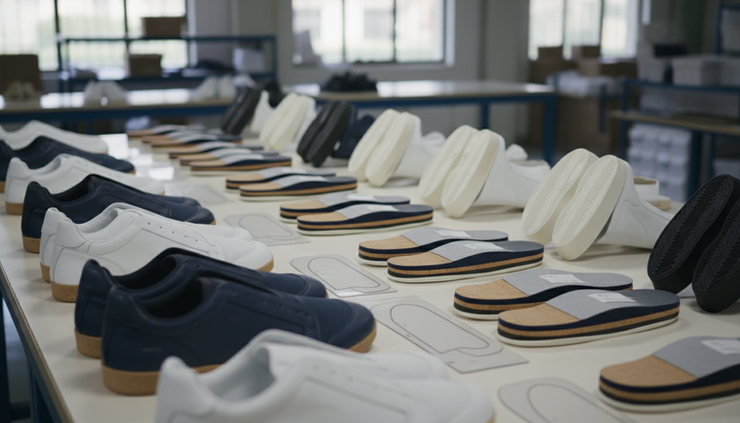
How can brands manage inventory while scaling?
Inventory can help growth, but it can also trap cash.
UrbanTread learned this when one slow-moving colour blocked money that could have gone into the bestseller. The brand then shifted to a simple inventory rule.
It divided products into three groups:
Product type | Action |
Bestseller | Keep regular stock and reorder before stockout |
Steady seller | Produce in controlled quantities |
Slow mover | Stop repeat production or sell through carefully |
The team also tracked sizes more closely. In footwear, a product can be “in stock” but still lose sales because the right sizes are missing.
For example, if sizes 7, 8, and 9 sell fastest, producing equal quantities across all sizes may create dead stock. UrbanTread adjusted size curves based on actual sales, not guesswork.
This improved cash flow and reduced pressure during restocks.
What changed between 200 and 2,000 units a month?
Area | At 200 units per month | At 2,000 units per month |
Product range | Multiple styles tested together | Bestsellers prioritised with fewer distractions |
Manufacturing | Small batch, flexible discussions | Planned production slots and repeat batches |
Quality control | Founder checks many pairs personally | Defined quality checks during and after production |
Inventory | Basic stock tracking | Size-wise and colour-wise planning |
Demand planning | Based on recent orders | Based on sales trends, campaigns, and reorder cycles |
Cash flow | Smaller working capital need | Material advances, production payments, and stock planning need discipline |
Packaging | Basic boxes and labels | More durable packing, clearer labels, faster fulfilment |
Team involvement | Founder handles most tasks | Roles, checklists, and vendor coordination become necessary |
Risk | Limited financial exposure | Higher risk if product, stock, or quality decisions are wrong |
This table shows the difference between selling more products and building a scalable footwear operation.
Selling more products is a revenue goal. Building a scalable operation means the brand can fulfil demand repeatedly without losing quality, cash control, or customer trust.
How can a footwear brand maintain quality at higher volumes?
UrbanTread did not wait until the end of production to check quality. That would have been too late.
It created checkpoints at each stage:
Material inspection before cutting
Upper stitching review
Sole attachment check
Size and fit sample review
Finishing inspection
Packing check
Random carton checks before dispatch
The brand also kept an approved sample for every style. Each new batch was compared against that sample for colour, finish, structure, and comfort.
This matters because scaling footwear production exposes small inconsistencies. A slight material change, a different insole thickness, or weak adhesive use can change the customer experience.
MakeMyShoe’s role as an OEM/ODM and private-label manufacturing partner becomes useful here. Brands need manufacturing teams that understand repeat orders, product specifications, customisation, and batch consistency. That support helps founders focus on D2C shoe brand growth without checking every pair themselves.

When should a D2C brand increase its production quantity?
A D2C footwear brand should increase production when demand is repeatable, quality is stable, cash flow is planned, and manufacturing timelines are clear.
UrbanTread increased production in stages:
Stage | Monthly production | Business focus |
Test stage | 200 pairs | Validate product, fit, pricing, and customer response |
Early repeat stage | 400 to 500 pairs | Reorder bestsellers and improve quality |
Growth stage | 800 to 1,000 pairs | Plan inventory, packaging, and manufacturing slots |
Scale stage | 1,500 to 2,000 pairs | Build systems for repeat production and cash control |
The brand did not jump from 200 to 2,000 in one order. It moved up as confidence improved.
Good signals for increasing quantity include:
Bestseller sells out repeatedly
Return reasons are understood and reduced
Size curve is clear
Reviews mention comfort and fit positively
Manufacturer can repeat the same quality
Cash is available for production and restocking
Dispatch and customer support can handle higher volume
This is also where a clear shoe brand growth strategy helps. Growth needs product planning, not only ads or discounts.
How can packaging and branding support scale?
Packaging is often treated as an afterthought. At 2,000 pairs a month, it becomes an operations issue.
UrbanTread improved packaging in three ways.
It used stronger boxes so products reached customers in better condition. It added clear size and SKU labels so fulfilment errors reduced. It also kept the unboxing clean and simple, without adding costly inserts that did not improve the customer experience.
The goal was not fancy packaging. The goal was protection, clarity, and brand recall.
For higher volumes, packaging should help the team move faster:
SKU labels should be easy to read
Size stickers should match inventory records
Boxes should stack safely
Return handling should be simple
Product information should be clear
This is one practical way to increase shoe sales without changing the shoe itself. Fewer wrong shipments, better presentation, and safer delivery can support repeat orders.
How did the brand handle repeat orders?
Repeat orders changed UrbanTread’s business.
At first, each production order felt like a new project. Later, the brand built repeat order files for each style.
Each file included:
Approved materials
Colour references
Sole type
Size curve
Stitching details
Insole specification
Packaging requirement
Past production notes
Common issues to avoid
This made repeat production faster and more consistent.
It also helped the manufacturer plan better. Instead of explaining the product from scratch each time, the brand and production team worked from a shared standard.
For D2C brands exploring D2C footwear manufacturing India, this is a major point. The right manufacturing partner should help maintain product memory across batches, especially when styles are reordered month after month.

What mistakes should footwear startups avoid while scaling?
UrbanTread avoided some mistakes and learned from others.
The biggest mistakes in footwear brand scaling are usually operational, not creative.
Avoid these:
Scaling every design at once Grow the proven styles first.
Ignoring size-wise demand A wrong size mix can create stockouts and dead stock at the same time.
Placing large orders before fixing quality Defects become more expensive at higher volume.
Depending on one informal communication channel Use written specs, production plans, and batch records.
Treating cash in stock as available cash Inventory is money locked until it sells.
Running campaigns without production readiness Demand without stock planning creates delays and cancellations.
Changing materials without testing A small material change can affect fit, comfort, and returns.
Choosing manufacturing only on lowest cost Reliability, repeat production, and quality control matter more when the brand grows.
FAQ
How can a D2C footwear brand scale from 200 to 2,000 units a month?
A brand can scale by proving its bestselling products, improving quality, planning size-wise inventory, increasing production in stages, and working with a reliable footwear manufacturer that can repeat the same product quality at higher volumes.
What is the first step before increasing footwear production?
The first step is to identify which styles, sizes, and colours are already selling well. Production should increase only for products with clear demand and manageable return reasons.
How does manufacturing affect D2C shoe brand growth?
Manufacturing affects product availability, quality, delivery timelines, and repeat production. If manufacturing is unreliable, sales growth can lead to delays, defects, and unhappy customers.
How can a footwear brand forecast demand?
A brand can forecast demand by reviewing past sales, size-wise movement, colour demand, upcoming campaigns, seasonal needs, and current stock levels. Forecasting should be updated before every production cycle.
How much inventory should a growing shoe brand keep?
A growing brand should keep more stock of bestsellers, controlled stock of steady sellers, and limited stock of slow movers. The right quantity depends on sell-through speed, production lead time, and cash flow.
When should a brand work with an OEM or ODM footwear manufacturer?
A brand should work with an OEM or ODM manufacturer when it needs product development, private-label production, custom designs, repeat batches, and better control over quality and scale.
How can a D2C footwear brand reduce returns while scaling?
Returns can reduce when the brand improves fit accuracy, size charts, material quality, finishing, packaging, and pre-dispatch checks. Tracking return reasons after every batch is essential.
Why is cash-flow management important in footwear scaling?
Footwear production needs money for materials, manufacturing, packaging, logistics, and restocking. Without cash-flow planning, a brand may sell well but still struggle to fund the next batch.
The main takeaway
Scaling from 200 to 2,000 units a month is not a single big production order. It is a controlled journey.
UrbanTread grew because it narrowed its product focus, improved quality, planned inventory, built repeat production systems, and increased manufacturing capacity step by step. That is the difference between short-term sales growth and a footwear business that can keep growing.
For emerging shoe brands in India, MakeMyShoe can support this journey as an OEM/ODM and private-label manufacturing partner, from initial production to larger-scale manufacturing. Growing footwear brands can discuss their production, customisation, and scaling requirements with MakeMyShoe to build a stronger path from first batch to repeatable growth.


